
Key Point | Details |
Intended Audience | Operators of Seafood Industry and businesses planning related goods, services or brand development. |
Primary Classes | Class 29, Class 31, Class 35 |
Extension Classes | Class 29, Class 30, Class 31, Class 35, Class 39, Class 40 |
Analysis Premise
In trademark practice, the Seafood Industry refers to a commercial system centered on aquatic animals. It covers everything from upstream supply of live fish, shrimp, and crabs, to midstream processing and freezing, and downstream brand operations and channel sales. This article focuses on how enterprises transform aquatic products into recognizable brands and deliver them to consumers through physical stores or e-commerce platforms. When selecting classes, both the attributes of the products themselves and the sales services must be considered simultaneously.
Primary Classes
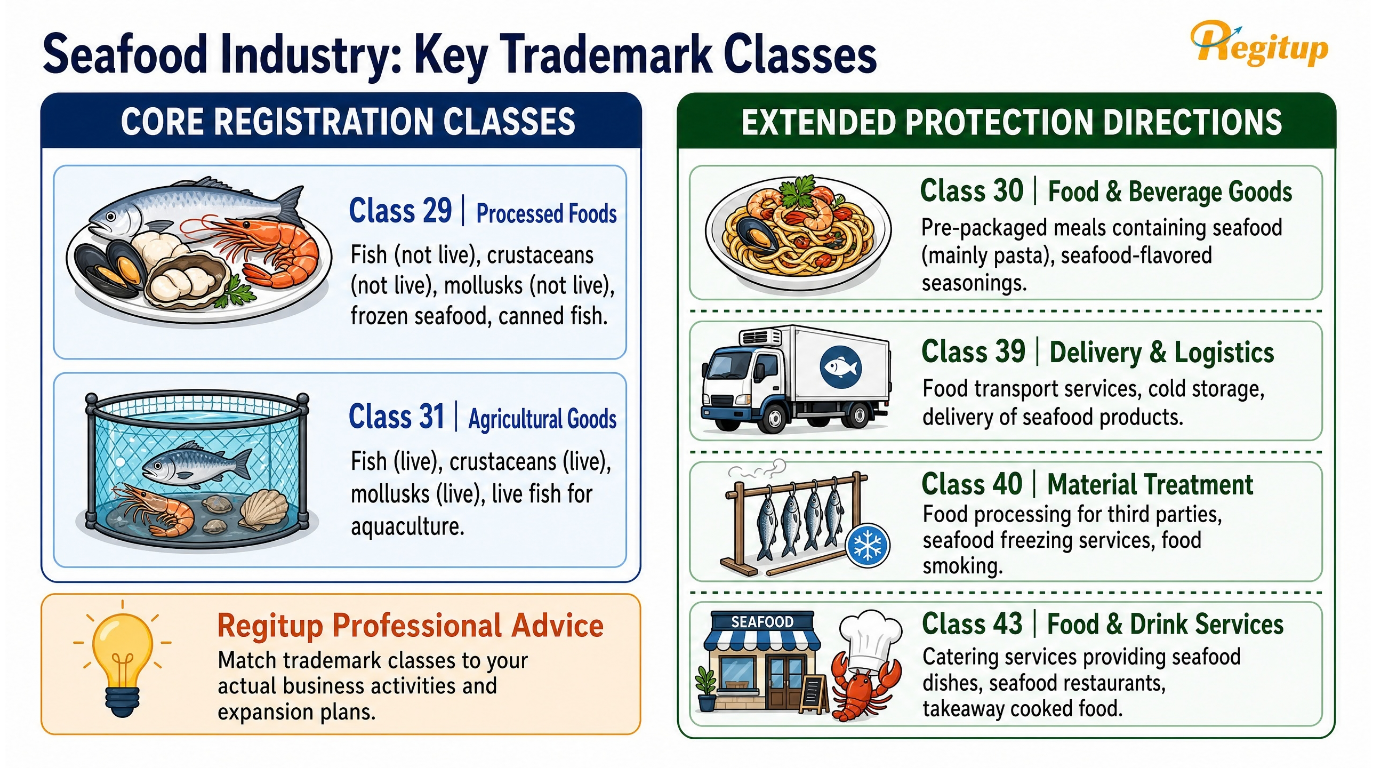
For seafood brands, ensuring that products are protected under the correct classes is the cornerstone of brand survival. The following are the three most core classes for the seafood industry:
Class | Application Scenario / | Examples of Goods/Service Descriptions |
Class 29 | Processed Seafood Products: The core physical goods of the brand, covering all processed non-live seafood. | Fish (not live), crustaceans (not live), mollusks (not live), frozen seafood, canned fish. |
Class 31 | Live Seafood: Involves aquaculture, live fish transport, or wholesale of fresh, unprocessed live animals. | Fish (live), crustaceans (live), mollusks (live), live fish for aquaculture. |
Class 35 | Brand Retail and Channel Management: Protects brand operation rights, including opening specialty stores, e-commerce platforms, and franchise management. | Retail or wholesale services for aquatic products, seafood chain store management, food supermarket services, online shopping services. |
Classes 29 and 31 form a complete coverage of "dead" and "live" products. Class 29 protects processed or frozen foods, which is the core for most brands, while Class 31 targets the original biological state. Class 35 is the soul of brand operation, protecting the brand name of sales services from confusion, and is a key barrier to prevent others from opening stores with the same name.
Extension Classes Based on Business Models
Beyond the core classes, seafood enterprises often need additional protection due to business diversification. The following classes are recommended for extension based on specific conditions:
Class | Application Scenario | Scope of Services to Consider |
Class 30 | Processed Pasta with Seafood as Ingredients | Pre-packaged meals containing seafood (mainly pasta), seafood-flavored seasonings, seafood sauces. |
Class 39 | Involving Cold Chain Transport and Storage | Food transport services, cold storage, delivery of seafood products. |
Class 40 | Providing Aquatic Processing or Freezing for Others | Food processing for third parties, seafood freezing services, food smoking. |
Class 43 | Operating Seafood Restaurants or Catering Services | Catering services providing seafood dishes, seafood restaurants, takeaway cooked food services. |
The choice of extension classes must be based on actual business operations. For example, if a brand operates a restaurant storefront, Class 43 is indispensable. If an enterprise owns a logistics fleet and takes on external deliveries, Class 39 can effectively prevent competitors from infringing in the logistics field.
Conclusion
In summary, the trademark layout of the Seafood Industry should center on Class 29 for processed products, Class 31 for live products, and Class 35 for retail services. For enterprises with catering, contract manufacturing, or logistics needs, protection should be extended to Class 43, Class 40, or Class 39. The value of a trademark lies in its exclusivity, and correct class selection is the prerequisite for exercising that exclusivity.
In actual applications, specific product descriptions, class order, and the scope of rights will vary depending on local regulations and business details. It is recommended to conduct a detailed evaluation before submitting an application to ensure that brand assets receive the most appropriate protection.
Assistance with Trademark Applications by Regitup
Trademark registration is a rigorous legal process, and correct class planning is the foundation for a brand's long-term development. The Regitup team has extensive experience in cross-border trademark practice and can provide precise class verification suggestions based on your business model. We assist in preparing professional application documents and submitting applications to the authorities on your behalf, ensuring your brand receives comprehensive legal protection in the intense market competition.
Start Your Trademark Registration
Frequently Asked Questions
Q1 : I only sell frozen seafood; do I need to register Class 31?
If your business does not involve "live" aquatic products, you generally do not need to register Class 31. Class 29 already covers frozen, chilled, or cooked seafood. However, if you plan to sell live aquatic products in the future, you should plan ahead.
Q2 : Why is Class 35 very important for operating a seafood e-commerce business?
Class 29 protects "products," while Class 35 protects "store names" and "platform names." For e-commerce, the brand recognition of the platform is extremely high, and Class 35 is a key barrier to prevent others from operating a platform with the same name.
Q3 : If I provide seafood gift box delivery services, do I need to register Class 39?
If delivery is merely an incidental service after sales, core protection in Class 29 and Class 35 is sufficient. However, if the brand also represents a professional cold chain logistics system or intends to offer delivery as an independent paid service, registering Class 39 is recommended.
Q4 : Are the classes for canned seafood and seafood noodles the same?
No, they are different. Canned seafood (primarily seafood) belongs to Class 29, but pre-packaged seafood meals that are primarily noodle-based (such as seafood instant noodles) are usually classified under Class 30. When planning a trademark, the proportion of ingredients in the product must be precisely defined.