
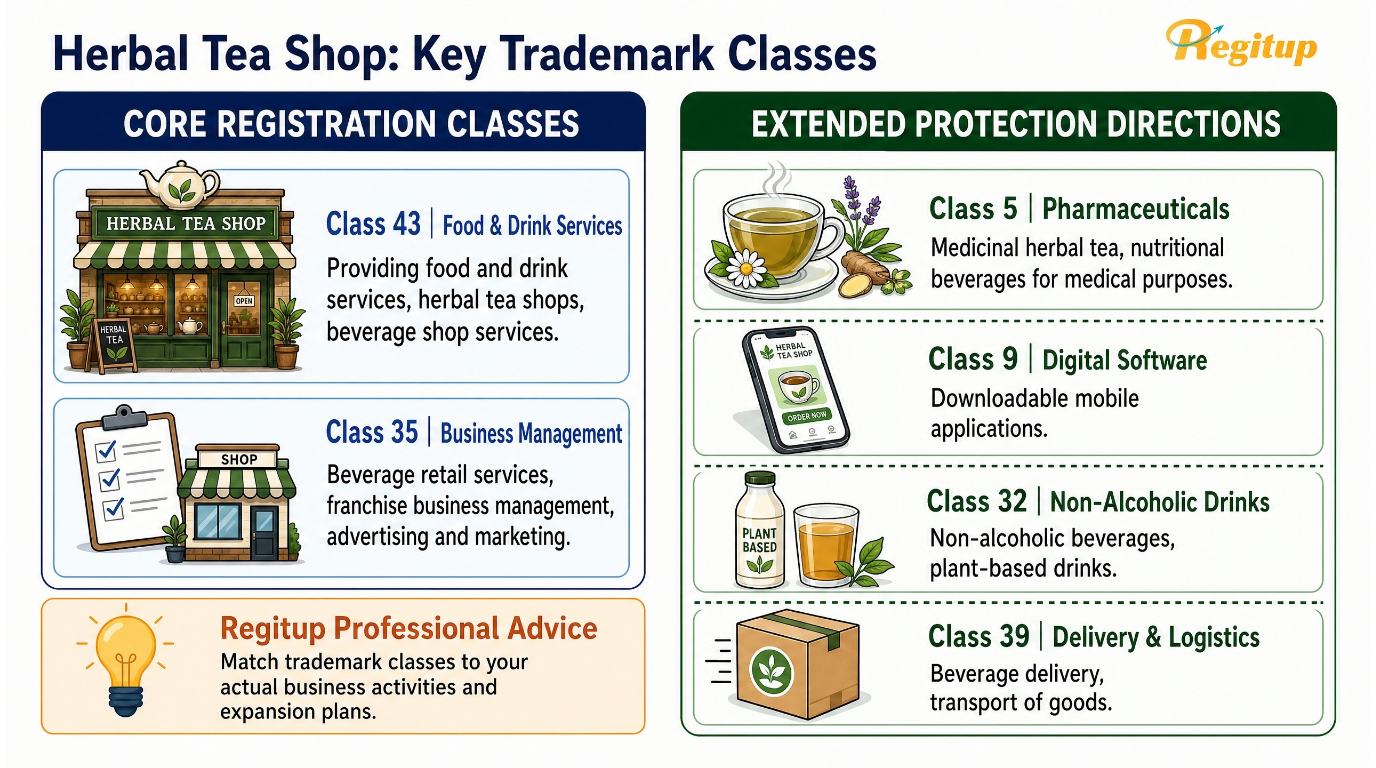
Key Point | Details |
Intended Audience | Operators of Herbal Tea Shop and businesses planning related goods, services or brand development. |
Primary Classes | Class 43, Class 35, Class 30 |
Extension Classes | Class 5, Class 9, Class 30, Class 32, Class 35, Class 39 |
Analysis Premise
In the context of trademark classification, a "Herbal Tea Shop" refers to a business model centered on physical stores or counters that provide ready-to-drink Chinese herbal tea for on-site consumption or takeout. These beverages typically involve traditional herbal formulas and possess health-promoting properties. This analysis also covers packaged beverage retail, franchise management, and related digital membership promotion, but excludes pure medicinal herb wholesale or pure technical R&D platforms.
Primary Classes
Class | Applicability / | Examples of Goods/Service Descriptions |
Class 43 | Core business, providing on-site preparation of herbal tea or takeout services. | Providing food and drink services, herbal tea shops, beverage shop services. |
Class 35 | Involves brand franchise operations, retail of packaged goods, and membership systems. | Beverage retail services, franchise business management, advertising and marketing. |
Class 30 | Production or sale of tea-based non-medicinal health beverages. | Tea-based beverages, non-medicinal herbal tea drinks. |
Class 43 is the foundation for store operations, protecting the right to "provide services" and preventing others from opening stores with the same name in the same area. Class 30 focuses on the "product itself," preventing counterfeiting when herbal tea is sold in bottled form. Class 35 protects the brand's competitiveness in marketing, franchise expansion, and online retail, which is particularly important for brands planning to franchise or conduct large-scale marketing.
Extension Classes Based on Business Models
Class | Applicability | Potential Scope of Services |
Class 5 | Herbal tea products with clear medical claims or sold as medicinal tea bags. | Medicinal herbal tea, nutritional beverages for medical purposes. |
Class 9 | Providing a dedicated App with ordering functions or digital membership points. | Downloadable mobile applications. |
Class 32 | Providing non-tea-based non-alcoholic plant beverages. | Non-alcoholic beverages, plant-based drinks. |
Class 39 | Having an independent delivery team providing herbal tea delivery services. | Beverage delivery, transport of goods. |
Class 40 | Providing OEM brewing and custom processing of herbal tea for other brands. | Tea processing, custom manufacturing of beverages. |
Class 44 | Providing Traditional Chinese Medicine (TCM) health consultation or constitution assessment services in-store. | TCM consultation services, alternative medicine services. |
Extension classes should be selected based on the direction of expansion. If moving toward a combination of medical and wellness services, Class 44 is key; if undergoing digital transformation by developing an App, Class 9 is necessary to protect digital assets and brand recognition.
Conclusion
In summary, the trademark layout for a herbal tea shop should center on Class 43, Class 35, and Class 30 to build a complete brand defense system. As business models diversify, Classes 5 (medicinal), 44 (consultation), or 9 (digital platforms) should be included as appropriate. Please note that the actual acceptability of specific goods or service descriptions, class arrangements, and the scope of rights may vary depending on the regulations of the filing jurisdiction and specific business details. Official requirements should be confirmed before formal application.
Professional Assistance from Regitup
Trademark registration is a professional legal action where precise class selection determines the boundaries of your rights. The Regitup team can assist you in verifying information, planning class combinations, preparing documents, and submitting applications on your behalf. We are dedicated to simplifying the process so your brand can thrive under legal protection.
Start Your Trademark Registration
Frequently Asked Questions
Q1 : If I have registered in the catering class, can I sell packaged herbal tea bags on my website?
Not necessarily. Class 43 protects "catering services." Selling "goods" involves retail services (Class 35) and the goods themselves (Class 30 or Class 5). It is recommended to supplement these classes to ensure legality.
Q2 : Why must a herbal tea shop register in Class 35 if it wants to franchise?
Class 35 includes "franchise business management." Registering in this class ensures you have a legal source of authorization, allows for effective control over the consistency of the franchise system, and prevents others from infringing on your business management rights.
Q3 : If herbal tea contains Chinese medicinal ingredients, must it be registered in Class 5?
It depends on the product positioning. If it is only for dietary health and does not claim medical efficacy, registering in Class 30 is sufficient. If it is positioned as a "medicinal drink" or emphasizes therapeutic effects, it must be registered in Class 5.
Q4 : Why register in Class 9 for developing an ordering App?
Class 9 covers downloadable software. Registering in this class prevents others from developing apps with the same name to mislead customers and protects the brand rights associated with digital assets.